

If your current security system tells you what went wrong yesterday, it belongs to yesterday.
Modern enterprises require systems that intervene today.
In an environment defined by volatility, uncertainty, and accelerated risk, action is the only acceptable standard.
Observation records history.
Action protects the future.
The organisations that understand this will not simply reduce loss. They will build resilience, protect reputation, and create stability in environments where others experience disruption.
Security that acts is not an upgrade.
It is the new baseline.
Across Australia and New Zealand, millions of cameras are switched on every day.
They record.
They store.
They wait.
And when something actually happens — a break-in, a forced entry, suspicious movement — the system often does the worst possible thing:
Nothing.
Footage exists. Evidence is there. But the moment has already passed.
This is the uncomfortable truth about traditional CCTV: most of it is passive. It watches incidents happen instead of helping stop them. In a world where response time defines outcomes, that gap matters more than ever.
The next evolution of security isn’t about adding more cameras.
It’s about turning existing cameras into something smarter.
That shift is already taking shape through solutions like Video IQ — a monitored video intelligence platform designed to transform passive CCTV into real-time decision support.
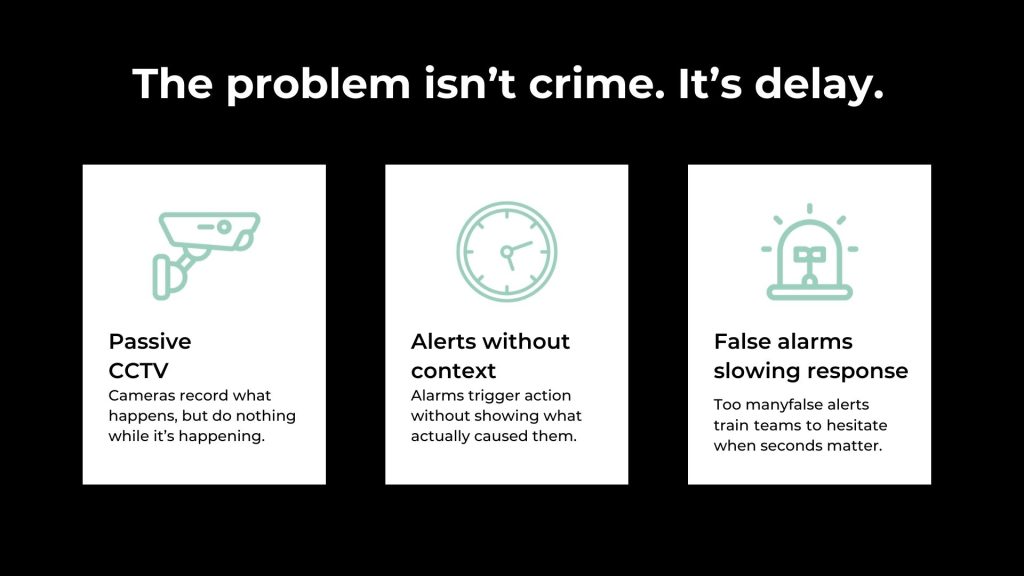
1. The Problem Isn’t Crime. It’s Delay.
Security failures are rarely caused by a lack of technology. They’re caused by hesitation.
An alarm triggers.
An operator investigates.
Multiple camera feeds load.
False alarms need to be ruled out.
Time slips.
By the time certainty arrives, the opportunity to intervene is gone.
False alarms don’t just slow things down — they condition everyone involved to hesitate. Monitoring teams become cautious. Responders become skeptical. Businesses pay for protection that reacts after the fact rather than preventing escalation.
The industry doesn’t need more alerts.
It needs faster decisions.
2. From Passive Footage to Real-Time Intelligence
This is where monitored video changes the conversation.
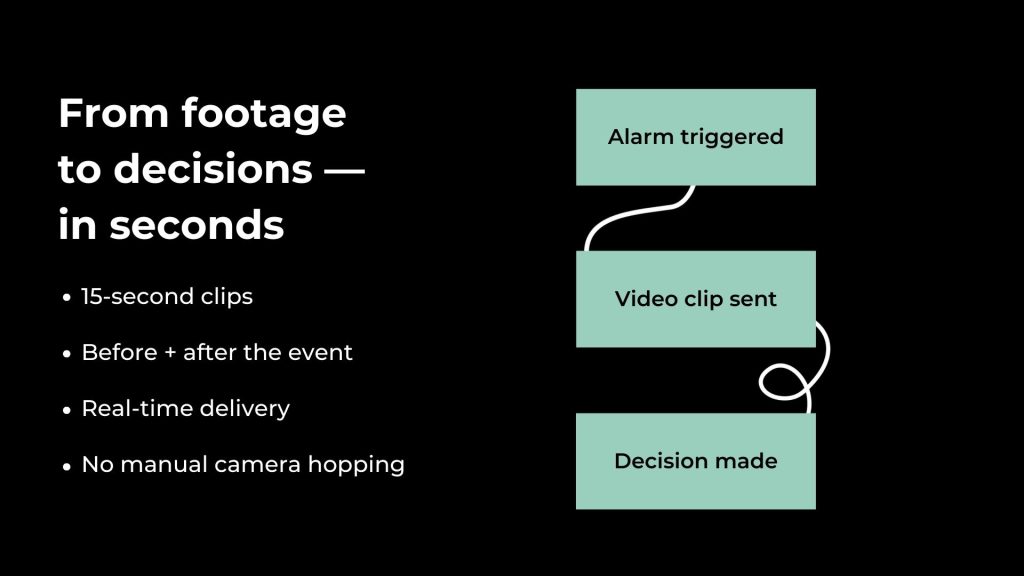
Instead of forcing operators to hunt for context, platforms such as Video IQ deliver it instantly — short video clips captured before and after an alarm event, sent in real time to monitoring centres.
Not hours later.
Not after manual logins.
Immediately.
That context changes everything.
Operators move from investigation to confirmation in seconds. False alarms are filtered out quickly. Genuine incidents are verified with confidence. And when responders are dispatched, they’re responding to evidence, not assumptions.
The difference isn’t subtle.
It’s structural.
3. Why Verification Changes Response Outcomes
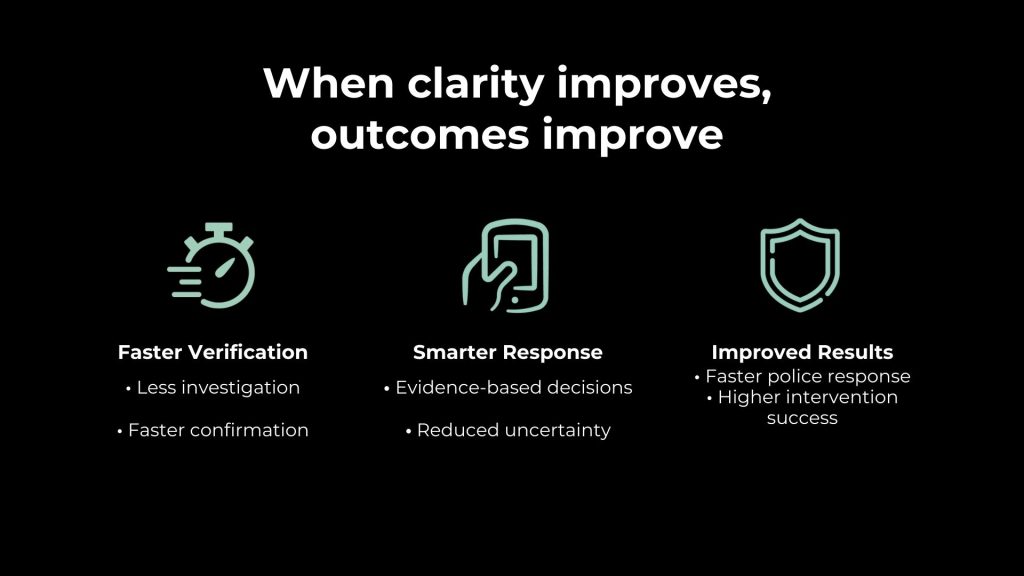
When incidents are verified visually, response quality improves — not just speed.
Police and security teams respond differently when there is clear, immediate proof of a real event. Visual confirmation reduces uncertainty and increases urgency. It removes the guesswork that slows action and drains resources.
This isn’t about escalation.
It’s about clarity.
And when clarity improves, outcomes improve.
4. Virtual Patrol: Proactive, Not Reactive
For decades, patrol models have relied on physical presence — vehicles, schedules, and human availability. While effective, they’re resource-heavy and difficult to scale.
Virtual patrol changes that equation.
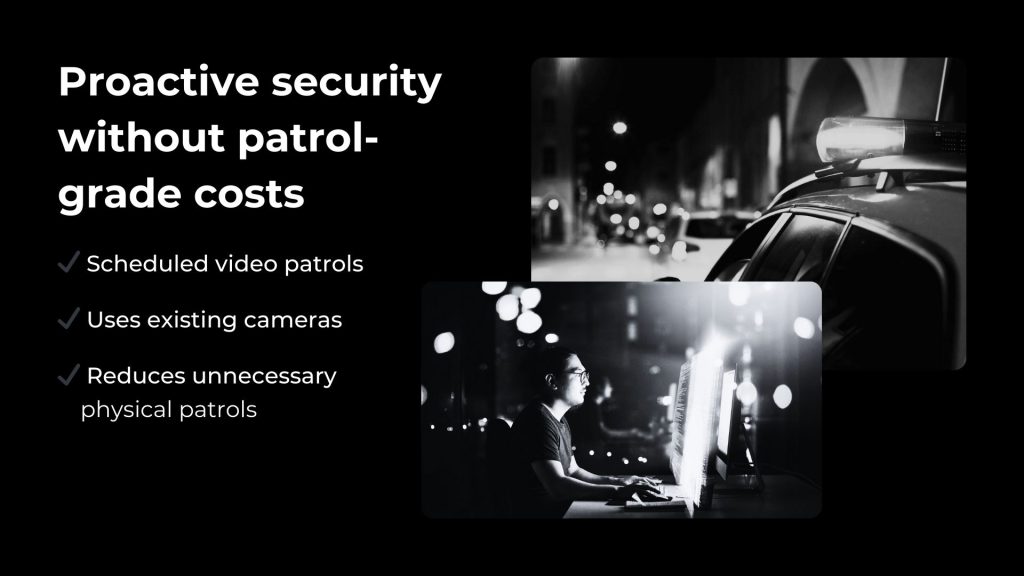
Through Video IQ, monitoring teams can schedule proactive video-based patrols using existing CCTV cameras. Sites are checked at critical times without dispatching physical guards unnecessarily.
The result is a more efficient model:
- Reduced patrol costs
- Consistent coverage
- Faster detection of anomalies
- Better use of human resources
Security becomes proactive instead of reactive. Prevention replaces response. And businesses gain coverage that scales without friction.
5. Speed Isn’t a Feature. It’s the Advantage.
One of the most overlooked barriers to adopting advanced security services is complexity.
Long installs.
Network dependencies.
IT approvals.
Downtime.
Modern monitored video solutions remove much of that friction.
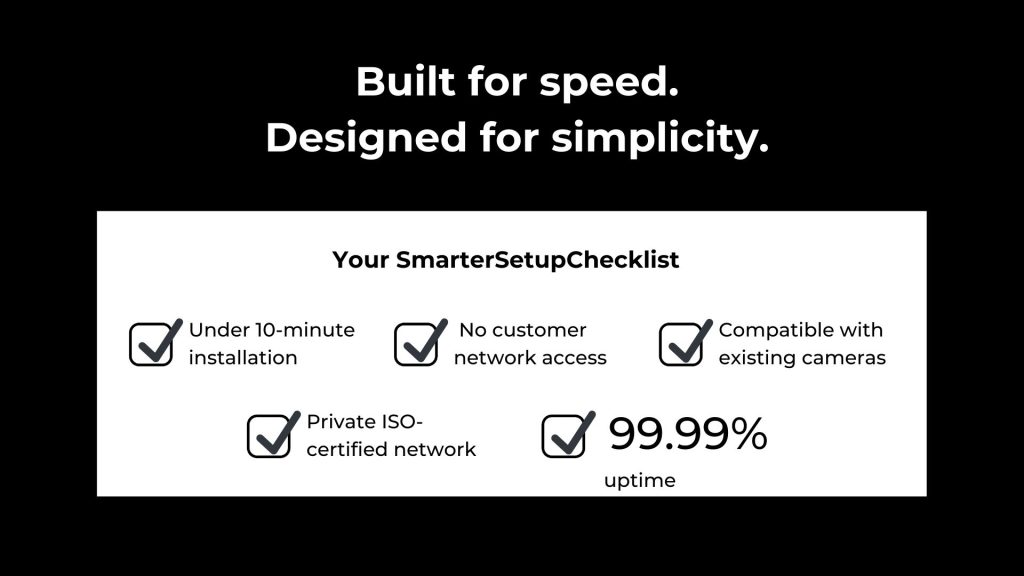
With installation times measured in minutes — often under ten — and the ability to operate independently of customer networks, deployment becomes simpler, faster, and more secure.
No invasive IT changes.
No reliance on customer infrastructure.
No unnecessary risk.
Security should reduce complexity, not add to it.
6. Security That’s Secure by Design
As systems become smarter, the question of cybersecurity becomes unavoidable.
Video data is sensitive. Alarm traffic is critical. Any system touching those streams must be built with security at its core.
Private, ISO-certified networks dramatically reduce cyber exposure by removing the need to access customer LANs entirely. With Video IQ, video clips are transmitted directly and securely to monitoring centres, protecting privacy while maintaining reliability.
With uptime measured at 99.99%, reliability stops being a promise and becomes an expectation.
That confidence matters — especially in enterprise environments where downtime isn’t an option.
7. What This Means for Businesses
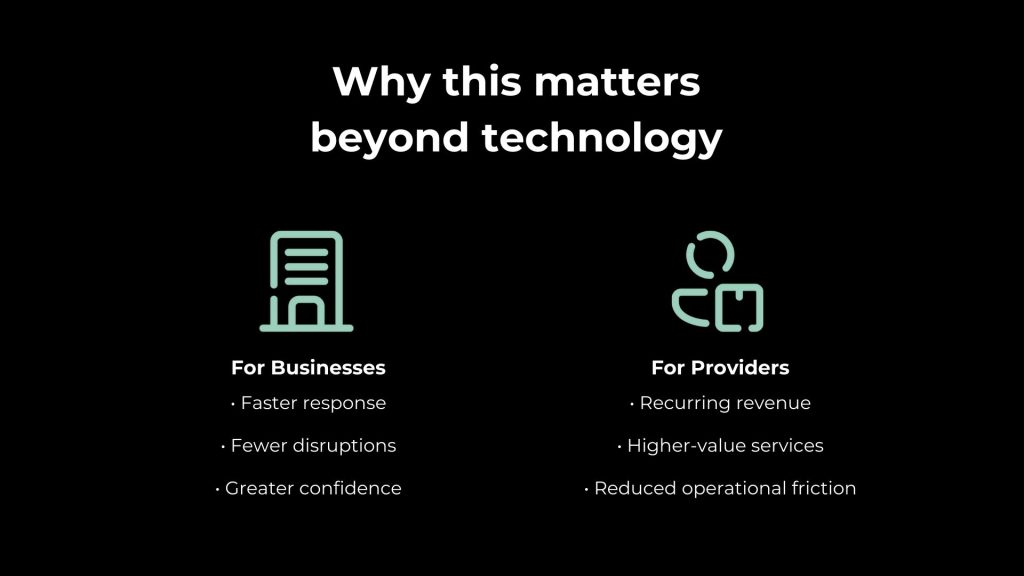
For end users, smarter monitored video delivers tangible benefits:
- Faster response to genuine incidents
- Fewer disruptions caused by false alarms
- Greater confidence that security systems will act when it matters
Security stops being something that documents incidents after the fact and becomes something that actively reduces risk.
8. What This Means for Security Providers
There’s another layer to this shift — one that’s just as important.
Security providers are under pressure. Hardware is increasingly commoditised. Margins are tightening. Customers expect more, but resistance to higher costs is growing.
Monitored video changes the economics.
It introduces recurring revenue.
It increases customer retention.
It elevates the conversation from hardware to outcomes.
Instead of selling cameras, providers deliver intelligence. Instead of competing on price, they compete on performance. And instead of reactive services, they offer proactive protection.
This isn’t a trend.
It’s a structural shift in how modern security businesses remain relevant.
9. CMS and the Evolution of Smarter Monitoring
At CMS, this evolution is already underway.
As a reseller of Video IQ, CMS works with businesses and monitoring partners to modernise existing CCTV infrastructure — without unnecessary replacement or complexity.
The focus isn’t on selling technology for its own sake.
It’s on enabling faster decisions, improving response outcomes, and delivering security systems that act in real time rather than simply record.
Quietly. Reliably. Effectively.
10. The Shift Is Already Happening
Security is no longer about watching what happened yesterday.
It’s about seeing what’s happening now — and acting immediately.
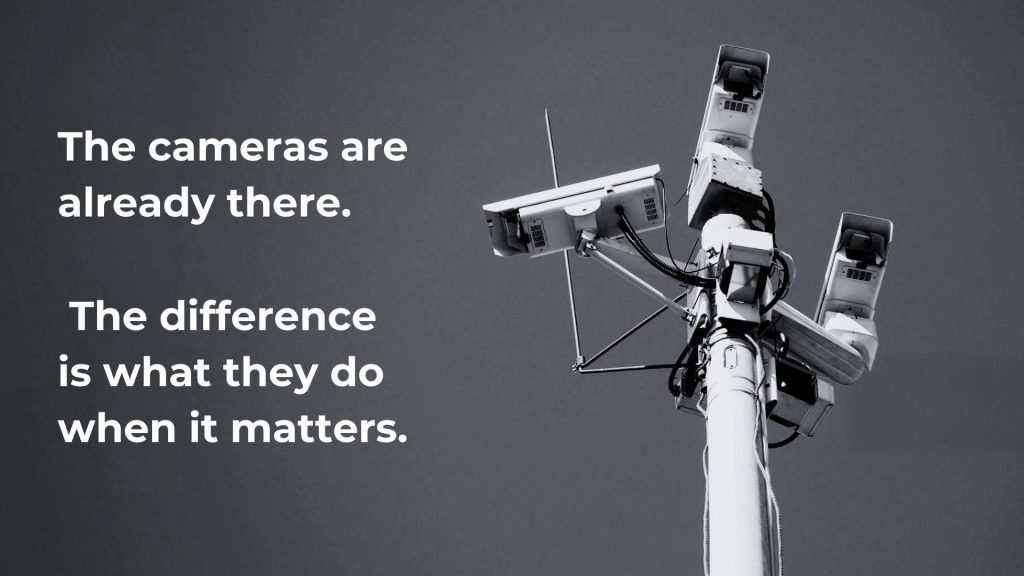
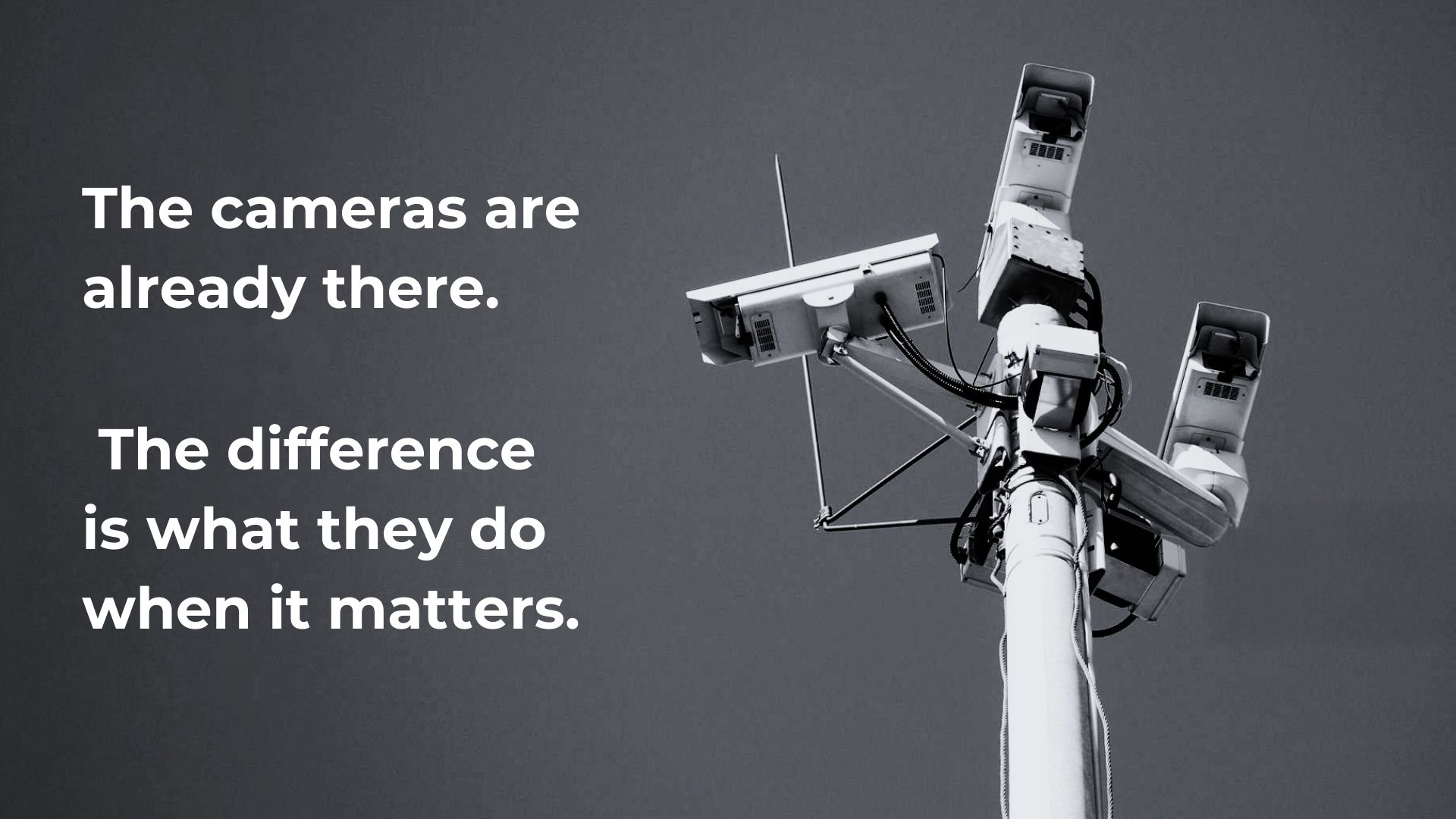
The cameras are already there.
The opportunity is already present.
The only question is whether systems are designed to watch…
or to decide.
In the year ahead, that difference will define which organisations lead — and which are left reviewing footage after the moment has passed.