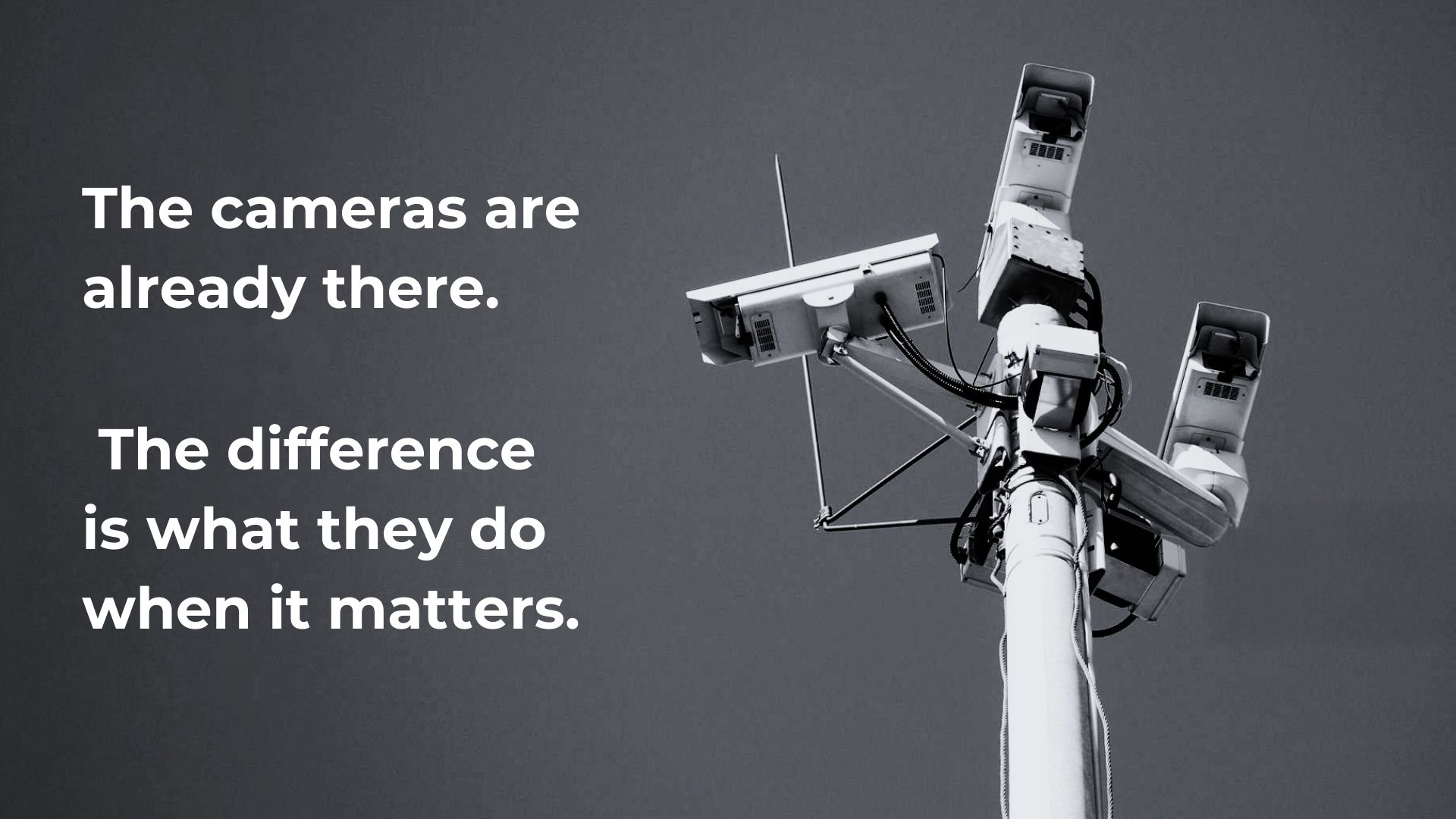


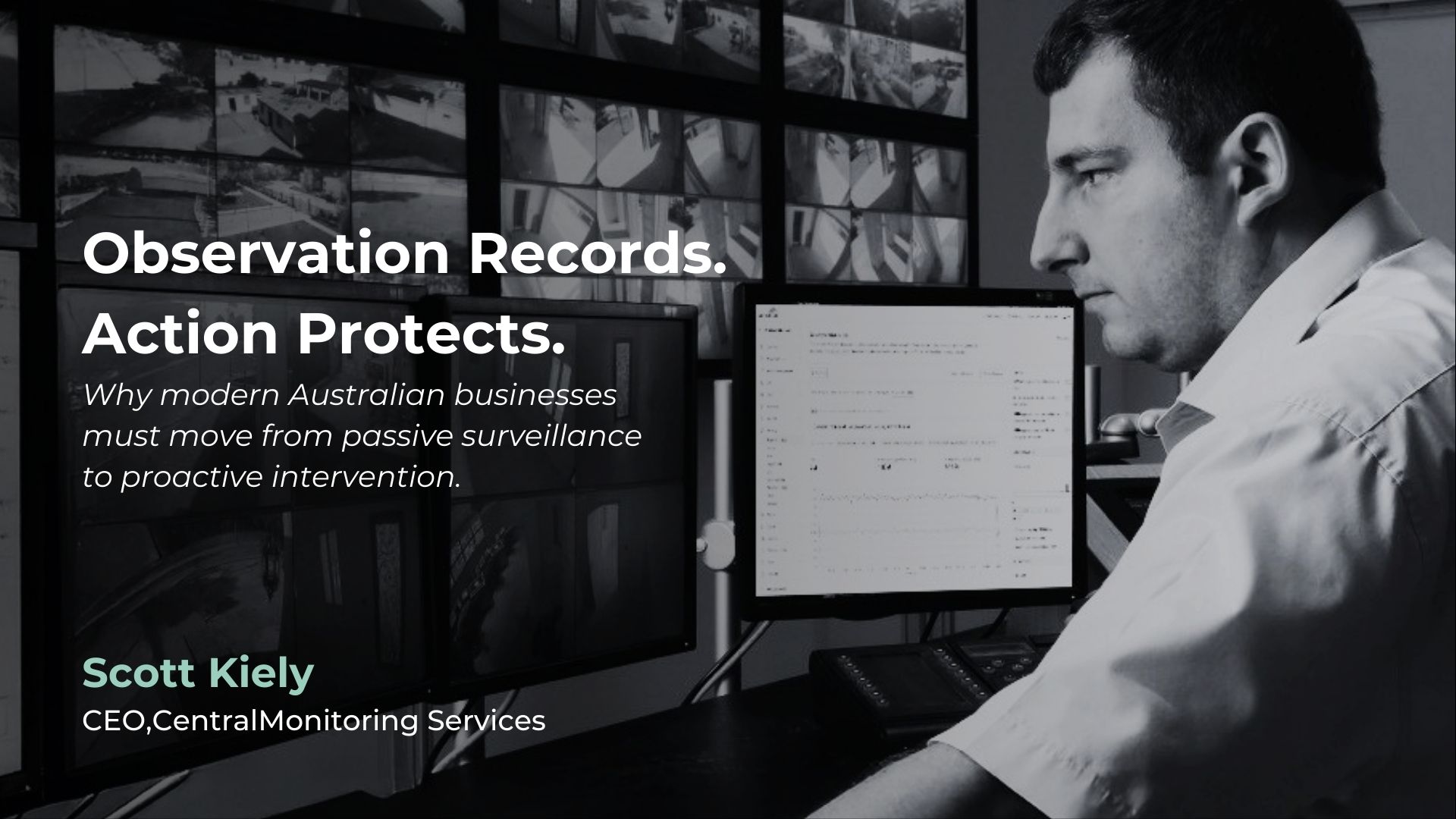
If your current security system tells you what went wrong yesterday, it belongs to yesterday.
Modern enterprises require systems that intervene today.
In an environment defined by volatility, uncertainty, and accelerated risk, action is the only acceptable standard.
Observation records history.
Action protects the future.
The organisations that understand this will not simply reduce loss. They will build resilience, protect reputation, and create stability in environments where others experience disruption.
Security that acts is not an upgrade.
It is the new baseline.
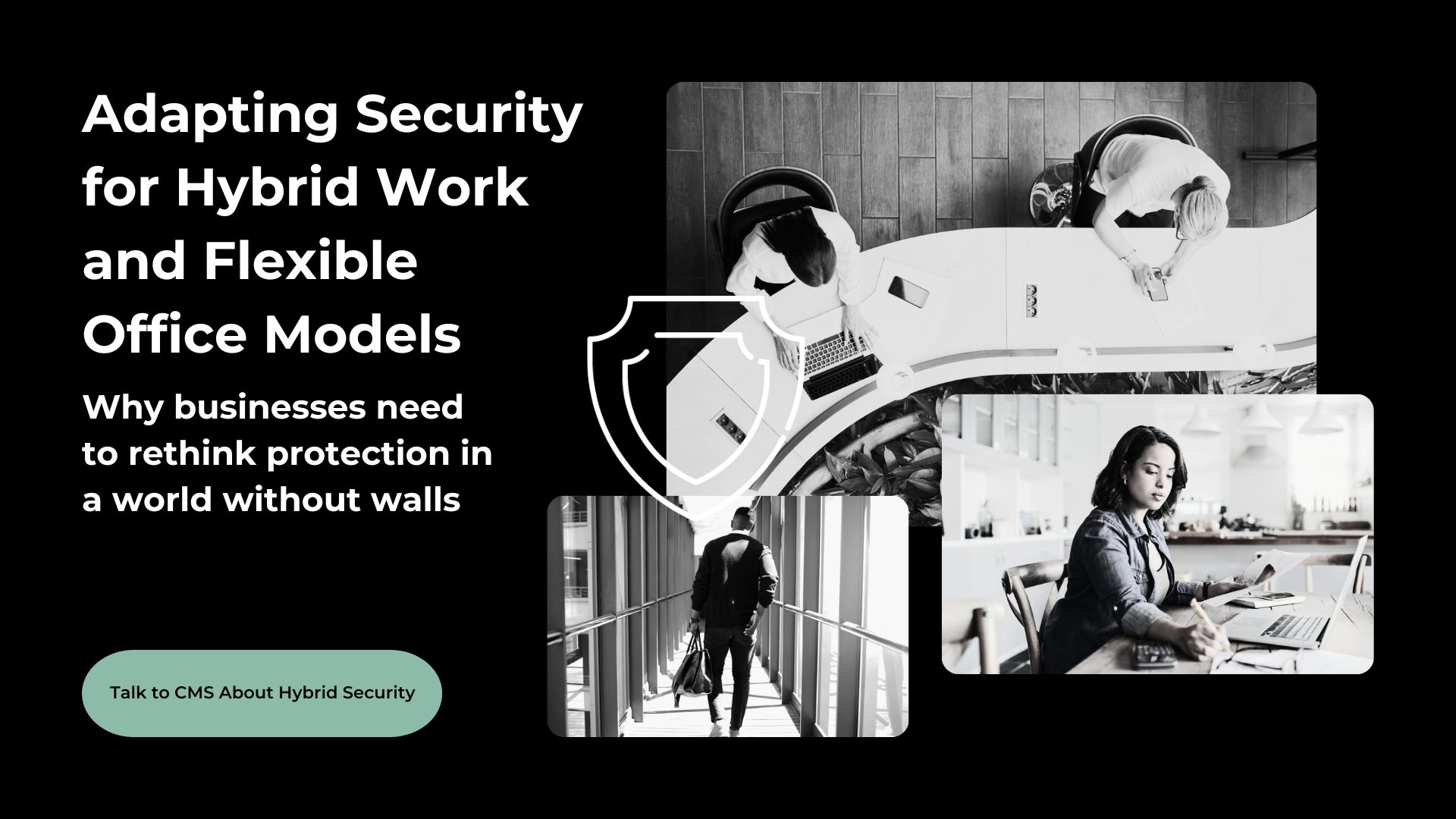
Why businesses need to rethink protection in a world without walls.
Let’s be real — the workplace will never be what it used to be.
The pandemic didn’t just change how we work; it permanently reprogrammed the DNA of business operations. Offices are no longer the only heartbeat of a company. Work now happens from kitchen tables, airport lounges, client sites, and everywhere in between.
And while flexibility feels like freedom — it’s also quietly redrawing the boundaries of security.
At Central Monitoring Services (CMS), we’ve seen it firsthand: the risk landscape for businesses is shifting faster than ever before. The tools, systems, and mindsets that once kept companies safe now need to evolve — because the threats have evolved too.
This is more than just an IT problem or a facilities challenge.
It’s about protecting people, data, and reputations in a world that no longer fits inside four walls.
1. The Modern Risk Landscape: Where Convenience Meets Complexity
Hybrid work isn’t a trend anymore — it’s the new normal.
It’s flexible, efficient, and great for employee satisfaction. But it also cracks open a range of vulnerabilities most businesses never had to think about.
Company data now travels across personal devices, public Wi-Fi, and cloud servers. Sensitive files live on laptops at home. Alarm systems protect offices that sit half-empty most of the week.
The traditional “lock-and-leave” mindset is outdated.
A business might have world-class firewalls, but if someone leaves a laptop open in a café — the whole system could still be exposed.
Security has gone from being about guarding locations to guarding lifestyles.
And that’s the key shift too many businesses haven’t made yet.

2. Why the Old Playbook Doesn’t Work Anymore
Before hybrid work, it was simple.
The office was the perimeter. Everyone came in, logged onto a secure network, and worked behind layers of protection that were managed in-house.
Now? The office is just one node in a much bigger web.
When employees work remotely, they bring new devices, apps, and behaviours into the mix — and that’s where gaps appear. Hackers don’t need to break in through your main door anymore; they can find their way through an unsecured device or a weak password halfway across town.
And it’s not just digital threats.
Empty offices, unattended equipment, and fewer on-site staff create physical vulnerabilities too. We’ve seen companies experience everything from power faults going unnoticed for days, to false alarms ignored because no one’s around to verify them.
The security model must evolve from reactive to proactive.
From “we’ll respond when something happens” to “we’ll prevent it before it does.”
That’s the mindset shift CMS helps businesses make — because in a hybrid world, protection is about foresight, not just firewalls.

3. The New Security Mindset: From Buildings to Behaviours
Here’s where a bit of Joseph Sugarman wisdom applies — people don’t buy products; they buy feelings.
Security isn’t just a system of locks, cameras, or monitoring dashboards. It’s the feeling of confidence that no matter where your team works, your operations are protected.
That confidence comes from adopting a modern security mindset — one that connects technology, people, and process.
It starts with awareness.
Every team member must understand that security is everyone’s responsibility. It’s not something that happens behind the scenes — it’s a living part of your company culture.
It continues with integration.
Physical security, cybersecurity, and employee protocols should all work together like gears in a machine. When one fails, the others keep turning.
And it’s sustained by partnership.
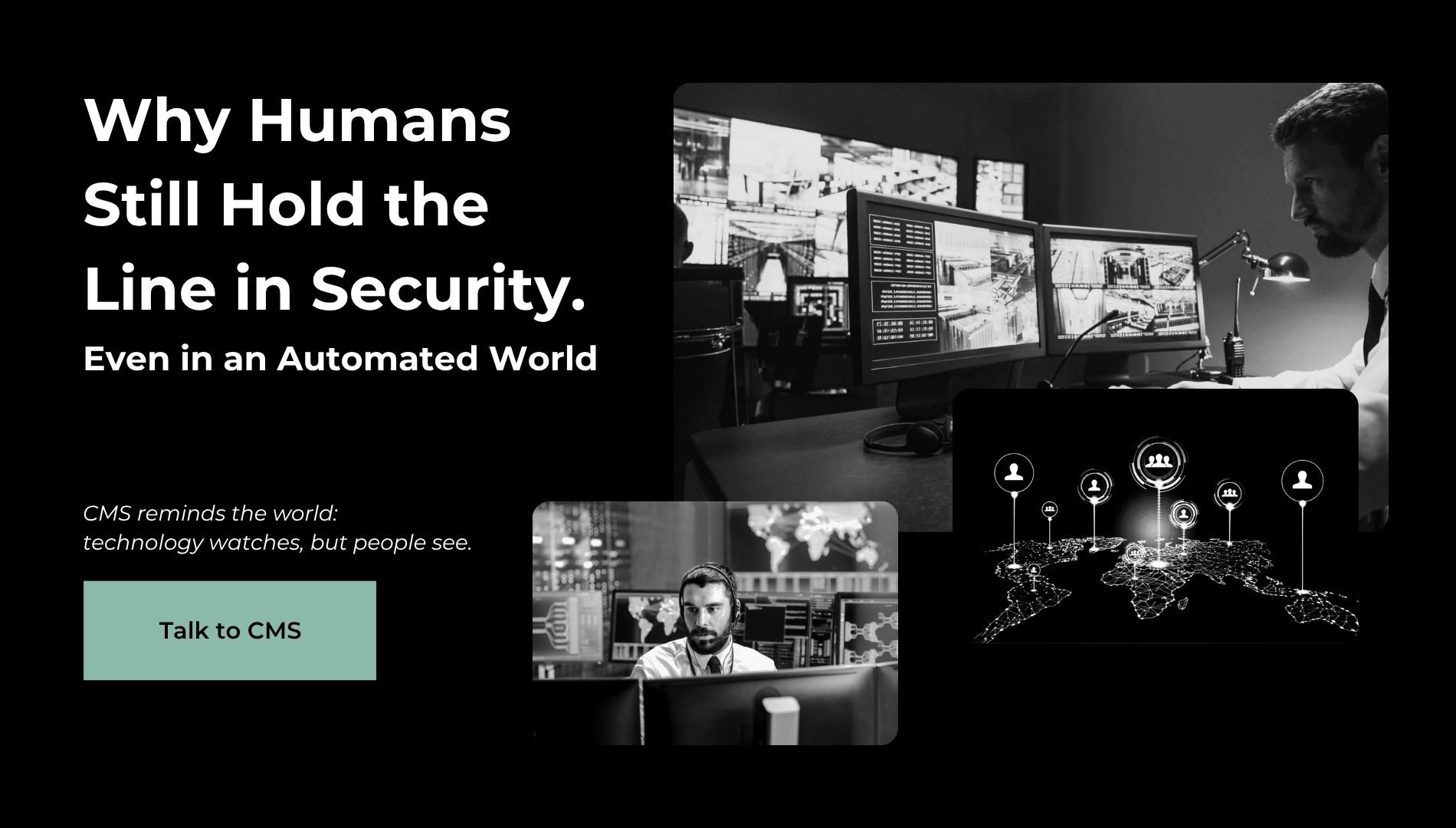
Working with a professional monitoring partner like CMS ensures your business has 24/7 coverage — not just at your headquarters, but wherever your people are.
When systems talk to each other, and professionals are watching over them, your team can focus on what they do best — running the business.

4. Best Practices for Securing Hybrid Workplaces
Every company’s risk profile is unique. But after years of helping businesses navigate complex security challenges, we’ve seen some clear best practices emerge:
a. Secure the digital perimeter
Implement multi-factor authentication, endpoint encryption, and continuous monitoring for all devices. Don’t just rely on your IT department — make security literacy part of your onboarding.
b. Protect the physical environment
Empty or semi-occupied spaces still need eyes. Smart sensors, remote monitoring, and scheduled patrols ensure offices remain protected even when teams aren’t there.
c. Empower your people
Most breaches come from human error, not malice. Regular training, awareness sessions, and a clear reporting culture can turn your employees from potential weak points into your strongest defense.
d. Build flexibility into your protection
Hybrid work is all about adaptability — your security strategy should be too. Partner with experts who can tailor your monitoring and response systems to your unique needs rather than forcing you into a one-size-fits-all model.
e. Stay proactive, not reactive
The best security doesn’t wait for alerts. It predicts and prevents. That means regular risk assessments, system audits, and technology reviews — not just reacting to incidents when they happen.
At CMS, we often tell clients: “If your security plan hasn’t changed in the last 12 months, it’s already outdated.”

5. The Human Side of Protection
Security is not just about systems — it’s about people.
When employees know they’re protected, they work with confidence. When clients know their information is safe, they trust your brand more deeply. And when leadership knows every location is covered, they make decisions faster, with peace of mind.
That’s what modern monitoring is really about — enabling progress by eliminating uncertainty.
We don’t just protect; we empower.
And it’s that human focus that sets CMS apart. We understand that behind every sensor, every system, every report — there’s a person trying to get home safe, a business trying to stay open, or a team trying to do their best work without worrying about what’s lurking in the background.

6. The Bottom Line: Security Without Boundaries
The future of work is borderless.
And if your workforce moves freely, your protection should too.
Security today isn’t just about keeping the bad out — it’s about keeping your people and data safe, wherever they go.
The businesses that embrace this adaptive mindset — combining tech, culture, and professional monitoring — will be the ones who thrive in the hybrid era.
Because while work can happen anywhere, peace of mind should follow you everywhere.
At CMS, we don’t just monitor systems — we protect possibilities.
And in a world that’s always on the move, that’s the kind of reliability every business deserves.